
Three checks decide whether a CGI studio deserves a place on your shortlist: does its portfolio show genuine fit for your sector, does it name an accountable creative lead with a documented pre-production process, and does it spell out exactly what you’ll receive and who owns it. Studios that pass all three rarely surprise you later. Studios that dodge any one of them usually do.
The practical next step is simple. Ask every studio still in contention for either a short trial deliverable or a written pre-production plan before you sign anything. A studio like Visual Trick will happily talk you through its process at this stage; one that hesitates is telling you something. Look for evidence rather than promises: tools referenced by name (render engines from vendors such as Autodesk), a genuine review trail on a platform such as Trustpilot, and portfolio pieces that match your brief rather than a generic showreel.
- Check portfolio fit against your actual sector, not just visual polish.
- Confirm a named creative lead and a written pre-production process.
- Get deliverables and rights terms in writing before the first invoice.
Pro Tip: Ask for a one-page “how we work” document before the first call. Studios with a mature process usually have one ready; studios without one will improvise, and that improvisation shows up later in your timeline.
Key Takeaways
A studio earns a place on your shortlist only when it names an accountable lead, documents its process, and specifies deliverables and rights before you sign.
| Point | Details |
|---|---|
| Three checks decide fit | Portfolio relevance, a named creative lead with documented process, and clear deliverables and rights. |
| Match studio type to brief | Freelancers suit single shots; large studios suit complex composites or planning packages. |
| Settle deliverables in writing | Confirm file formats, source assets, and licence terms before the project starts. |
| Score proposals, don’t guess | Weight portfolio fit, process, price, rights, and turnaround, then use a trial to break close ties. |
| Visual Trick as a specialist route | Structures projects into named milestones with EXRs, camera data, and planning-ready photomontage files. |
Table of Contents
- What questions should you ask a CGI studio?
- Freelancer, small studio, or large company: which fits your brief?
- What deliverables and file rights should you expect?
- How much should a CGI project cost, and how long does it take?
- How do you evaluate a studio’s portfolio properly?
- How do you turn a shortlist into a defensible decision?
- What red flags and contract terms should you watch for?
- How does a specialist studio structure a real project?
- Get a specialist studio working on your visuals
- Sources
What questions should you ask a CGI studio?
The right questions expose whether a studio can actually deliver, not just talk about delivering. Ask them in this order and note how confidently each is answered.
- Who is the accountable creative lead on my project? You want a name, not a department. A vague “our team will handle it” is the first red flag.
- What does your pre-production process look like? Expect mention of briefing calls, reference gathering, and a documented shot list or mood board stage before any modelling begins.
- How do revisions work, and how many are included? A firm number (two or three rounds is typical) beats an open-ended “we’ll work with you until you’re happy,” which usually means unlimited scope creep in both directions.
- What are the milestone deliverables, and when do I see them? Look for concrete checkpoints: block-out review, look development approval, final render sign-off.
- Which software and render engines will you use? Studios that name their pipeline (Blender, V-Ray, Arnold, Redshift, or similar tools documented by Autodesk) tend to have more disciplined production habits than those who answer with “we use the best tools for the job.”
- What file formats and source assets do I receive? Final JPEGs only, or layered files and camera data too?
- What are the payment terms and cancellation rules? Staged payments tied to milestones are standard; a large deposit with no milestone structure is not.
Positive answers sound specific: a named lead, a described process, a fixed revision count. Red flags sound generic: “it depends,” “we’ll figure that out,” or silence when you ask for a written scope.
- Push for milestone acceptance criteria in writing, not verbally agreed upon.
- Ask for a sample deliverable preview before committing to the full brief.
- Get turnaround times for change requests specified, not implied.
A studio that positions itself as a genuine partner tends to ask you questions in return, about your brand, your audience, and how the visuals will actually be used, before quoting price. That reciprocal questioning is often the clearest early signal of a strategic partner rather than a supplier.
Pro Tip: If a studio can’t answer the revisions question with a number, assume the number is zero in practice. Vague policies almost always resolve in the studio’s favour once you’re mid-project.
Freelancer, small studio, or large company: which fits your brief?
The three common operating models suit very different jobs, and picking the wrong one is the single most common way marketing teams overpay or under-deliver.
Freelance or solo artists offer the lowest cost and the most direct communication, but capacity is limited to one person’s calendar. They suit single hero shots, a one-off product render, or small briefs where you can tolerate risk if that person falls ill or gets overbooked.
Boutique or small studios sit in the middle: a handful of specialists, more resilience than a sole freelancer, and still personal enough that you deal with the same people throughout. This tier tends to fit recurring campaign assets and mid-sized product ranges well, and pipeline discipline varies more here than at either extreme, so checking how a specific studio’s delivery model matches your project scope matters more than at either end of the spectrum.
Large production companies bring redundancy, specialist departments, and capacity for complex camera-matched composites or large planning-grade visualisation packages. You pay for that resilience, and turnaround on small jobs can be slower simply because you’re one client among many.
- Single hero shot or product render: freelancer or small studio.
- Recurring campaign assets across a season: boutique studio with repeatable workflows.
- Complex composite work or planning submissions: larger studio with dedicated pipeline capacity.
Pro Tip: If your brief will repeat quarterly, ask any studio whether they build reusable templates or start from scratch each time. Template-driven workflows cost less on repeat orders but can look less bespoke on the first one.
What deliverables and file rights should you expect?
Studios should hand over more than a final image, and settling this before the project starts avoids awkward negotiations after delivery.
Standard deliverables include the final rendered images or sequences, layered PSD or EXR files for post-production flexibility, the 3D source assets, texture maps, mask passes for compositing, and camera data if you’ll need matched angles later. For planning applications, you also need a defined tolerance for accuracy against the architectural model, since planning authorities scrutinise these far more closely than marketing imagery.
- Final renders in the resolution and format you’ll actually use (web, print, exhibition).
- Layered source files if you expect to retouch or repurpose images later.
- Camera data and 3D assets if future angles or updates are likely.
- Written confirmation of licence terms: exclusive ownership versus limited usage rights.
Licensing is where most disputes start. A studio may retain rights to reuse assets in its own showreel unless you negotiate exclusivity, and campaign reuse across multiple channels sometimes needs a broader licence than a single listing image. Paste a short handover checklist into your RFP so every studio answers the same questions the same way, rather than each interpreting “deliverables” differently.
| Point | Details |
|---|---|
| Confirm file formats early | Ask specifically for layered files, EXRs, and camera data, not just final JPEGs. |
| Settle ownership before signing | Clarify whether you get exclusive rights or a limited-use licence for the assets. |
| Standardise your RFP questions | Use one handover checklist across all studios so answers are directly comparable. |
How much should a CGI project cost, and how long does it take?
Price and timeline both move on the same handful of variables, and understanding them lets you spot a quote that doesn’t match the scope you’ve described.
Cost drivers:
- Photorealistic fidelity required (a marketing hero shot demands more polish than an internal concept visual).
- Complexity and number of unique 3D assets or camera angles.
- Whether you need stills, animation, or added VFX elements like particles or moving water.
- Level of art direction and how many iteration cycles are built into the quote.
Timeline drivers:
- Pre-production time, including briefing and reference gathering.
- Review cadence and how quickly your team returns feedback.
- Rendering time itself, which scales with resolution and scene complexity.
- Post-compositing and colour grading before final sign-off.
A rough sense of scale: a single hero shot might take a couple of weeks from brief to final delivery; a mid-sized product pack often takes several weeks; a planning-ready exterior visualisation can take multiple weeks depending on review rounds and accuracy checks required.
- Ask for pricing broken down by image or by milestone, not a single opaque total.
- Compare per-image, per-hour, and retainer pricing models against your actual usage pattern.
- Treat unusually low bids with suspicion. Understanding where each production stage adds cost makes it much easier to tell whether a cheap quote has simply cut a stage, not the price.
How do you evaluate a studio’s portfolio properly?
A polished portfolio tells you a studio can produce good-looking images. It does not automatically tell you whether they can produce good-looking images of your specific brief, which is a different and narrower question.
Look for industry fit first: has this studio actually rendered products, interiors, or buildings similar to yours, or is every example from an unrelated sector? Consistency matters more than any single hero image, so scan for uniform lighting logic and material accuracy across a whole gallery rather than one standout shot. Pay particular attention to edge cases studios often fudge: glass, hair, wet surfaces, and reflections. These are technically hard, and how a studio handles them tells you more than a perfectly lit hero render ever will.
- Ask for render wireframes or texture atlases to see the model underneath the polish.
- Request a sample EXR or PSD to check layer structure and compositing discipline.
- Confirm which render engine and pipeline produced the work you’re looking at.
- Ask which named lead worked on a specific case study, not just the studio as a whole.
Portfolio platforms like Behance are useful for this because studios post detailed case studies there, not just final images, and comparing a second portfolio side by side helps you calibrate what “good” looks like across the market. Technical transparency, render breakdowns, named leads, pipeline notes, tends to correlate with production discipline more reliably than the polish of the hero shot alone.
Pro Tip: Read Trustpilot and similar reviews for recency and relevance rather than star rating alone. A five-star review from three years ago tells you less than three recent reviews describing how the studio handled a difficult revision.
How do you turn a shortlist into a defensible decision?
Score every proposal against the same weighted criteria and the choice stops being a matter of taste.
Score each studio out of ten per category, multiply by the weight, and total the result.
- Score portfolio fit first, since a technically brilliant studio with the wrong aesthetic still isn’t the right choice.
- Score process and communication next, using how they answered your due-diligence questions as evidence.
- Total the weighted scores and treat anything within five points of the leader as a genuine tie, not a clear winner.
When two studios land close together, don’t force a decision on gut feel alone. A short paid trial deliverable, one shot, one revision round, or a brief technical audit of their pipeline, breaks the tie with evidence instead of guesswork. Comparing due-diligence checklists against a structured vendor evaluation framework can also sharpen your own scoring criteria before you send the first RFP.
| Point | Details |
|---|---|
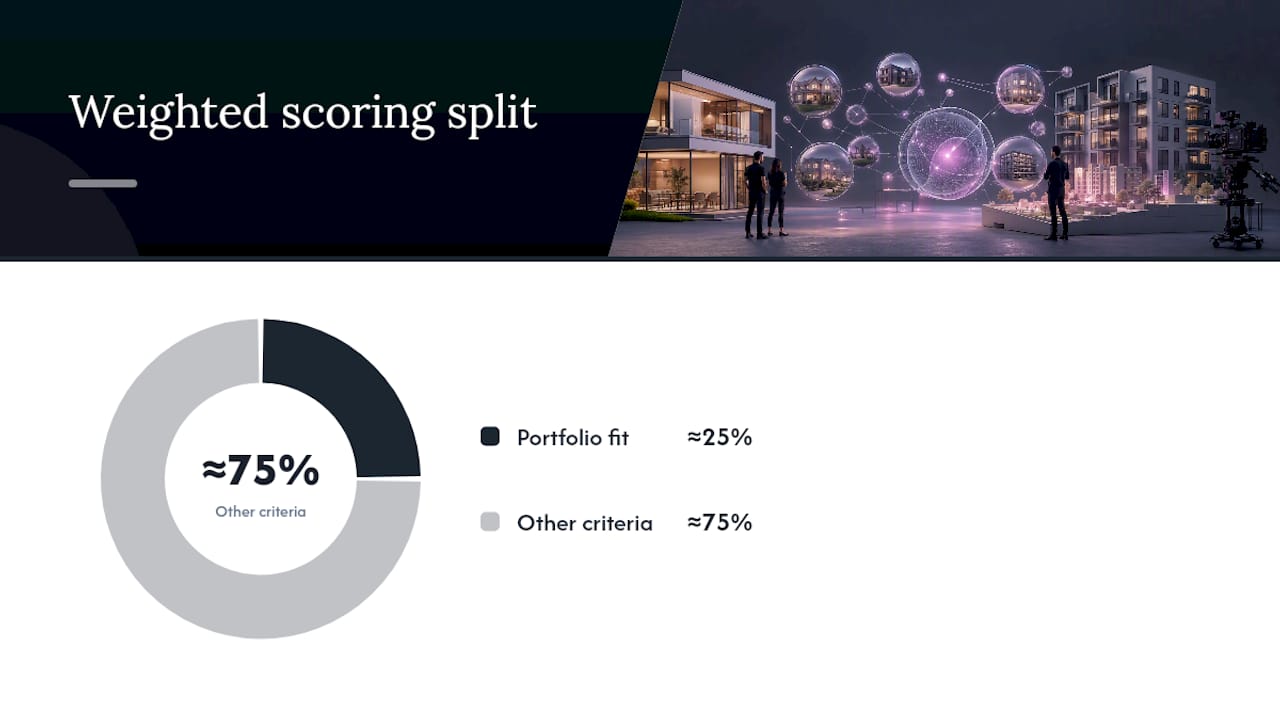
| Weight portfolio fit highest | Aesthetic and sector match should carry roughly a quarter of the total score. |
| Treat close scores as ties | A gap under five points on a weighted scale means run a trial, not a coin toss. |
| Use a paid trial to decide | A small sample deliverable settles disputes better than another round of calls. |
What red flags and contract terms should you watch for?
The clearest warning signs are absences, not mistakes: no named accountable lead, no sample deliverables offered, a revision policy that stays vague no matter how directly you ask, or a turnaround estimate that seems too fast for the scope described.
- Push for milestone acceptance criteria written into the contract, not just discussed on a call.
- Insist on a defined revision allowance and a clear change-order process for anything beyond it.
- Confirm delivery of source assets or an explicit licence, and tie payment stages to specific deliverables.
Use precise language in the proposal itself: request a “named creative director,” “delivery in [specified formats],” a stated “number of included revisions,” and, for planning work, defined “rendering tolerances for planning visuals.” Specific language in writing is far harder to walk back than a verbal assurance on a sales call.
Pro Tip: If a quote comes in noticeably below every other bid, ask exactly which stage has been cut. It’s almost always revisions, source file delivery, or review rounds, not raw rendering time.
How does a specialist studio structure a real project?
A typical architectural or planning brief at a specialist studio like Visual Trick breaks into five stages: pre-production and briefing, modelling, look development, rendering, and compositing, each with its own named milestone and sign-off point rather than one long black box between brief and final image.
Deliverables for this kind of work typically include the final renders, EXR files for post-production, camera data for matched future angles, and photomontage files where the visual needs to sit accurately within an existing site photograph for planning submission. Clear communication points at each milestone, rather than one review at the very end, are what keep iteration cycles short and predictable.
The studios that cause the fewest problems aren’t necessarily the most talented ones. They’re the ones who tell you exactly what happens at each stage, who’s accountable for it, and what you’ll have in hand when it’s done.
What lessons come from working with marketing teams?
Marketing teams most often lose money chasing the lowest quote rather than the clearest process. A studio you can rely on repeatedly beats a cheaper one you re-vet every quarter.
Get a specialist studio working on your visuals
Everything above points to one practical filter: fit, process, and clarity beat polish alone. Visual Trick works specifically with property developers, architects, planning consultants, and estate agents on CGI that needs to hold up under scrutiny, whether that’s a planning committee or a marketing director signing off a campaign. Where a generalist studio might treat your brief as one more render job, a specialist in architectural visualisation already knows the accuracy tolerances planning authorities expect and the file formats marketing teams actually need downstream.
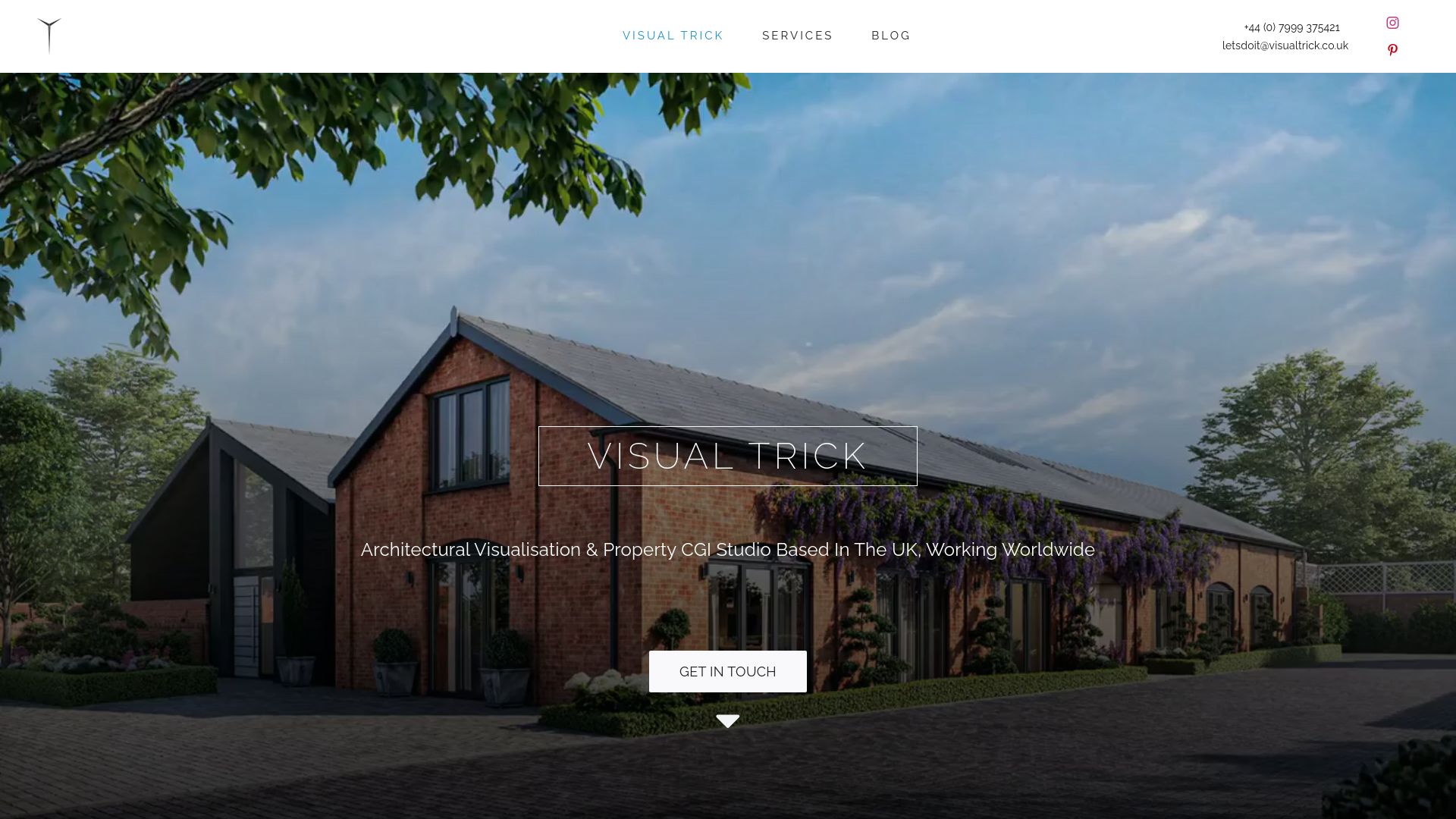
If your brief involves interiors specifically, the CGI for interior designers service page shows deliverable examples closer to that scope. Either way, the next step is straightforward: send over your brief and reference material and request a quote before your shortlist deadline, so you have a like-for-like comparison against the other studios you’re evaluating.
Sources
- Choosing the Right CGI & Motion Studio for Your Client Needs: A Strategic Guide for Brand Managers — Airglow Studio
- Autodesk: 3D animation software (media & entertainment solutions)
- CGI Workflows Explained: A Professional’s Complete Guide
- Behance portfolio — xo3d
