
Yes, properly briefed marketing and planning CGI routinely delivers measurable returns for property projects through more leads, faster sales, price uplift and reduced planning risk. The return depends on three conditions: a clear brief tied to a sales or planning objective, proper tracking from day one, and assets built for reuse across channels. The sections below set out the metrics, the measurement method and a commissioning checklist to get there.
TL;DR:
- Set up dedicated landing pages, UTM tags, and CRM lead source fields before launch; compare channels and creative variants using more than last click attribution.
- A £4,000 asset pack that generates 80 leads costs £50 per lead; 12 reservations put cost per sale at roughly £333.
- Log each test’s dates, channel, and creative, and wait for a few dozen leads per variant; smaller samples cannot distinguish effects from weekly noise.
- Choose Type 3 views for lower sensitivity sites and Type 4 views that are survey and scale verifiable for sensitive locations; agree methods early.
- Commission planning and marketing visuals from the same survey data and model, then request layered files and reuse rights to avoid paying for repeat production.
Table of Contents
- What ROI from property marketing CGI actually looks like
- How to measure and attribute ROI from your CGI investment
- Commissioning checklist to maximise marketing CGI ROI
- Visuals for planning applications: verified views and avoiding delays
- Practitioner perspective: scoping, reuse and one short project illustration
- How we support ROI-focused CGI projects
- FAQ
- Sources
What ROI from property marketing CGI actually looks like
Property teams tend to measure CGI performance against five outcomes: cost per lead, conversion rate from enquiry to viewing or reservation, time-to-sale reduction, average sale price uplift, and planning application outcomes. Each one translates into a number a sales or planning director can report upward.
Price uplift is worked out by comparing the achieved price (or asking price) on units marketed with high-quality CGI against comparable stock marketed with standard photography or floor plans alone, expressed as a percentage difference. Time saved is converted to cash by multiplying weeks shaved off the sales cycle by the weekly holding cost (finance, void rates, marketing spend) for the unsold units. Neither figure is fixed. It shifts with the audience (an investor buying off-plan behaves very differently from a private buyer walking a show home), the product type, and how much of the asset pack gets reused rather than recommissioned.
Immersive, high-fidelity digital experiences have been shown to shorten evaluation time and support conversion in high-involvement purchase decisions such as property, provided the rendering is realistic enough to build trust rather than undermine it, according to research on VR and AR in high-involvement purchase decisions.
Typical outcomes to track:
- Cost per lead by channel, so you can compare CGI-led campaigns against photography-only ones.
- Conversion rate from enquiry to viewing, reservation or sale.
- Weeks of sales cycle saved, converted into holding-cost savings.
- Price premium achieved on CGI-marketed units versus comparable stock.
- Planning outcomes: approval on first submission versus requests for further information.
Marketing CGI budgets and planning photomontage fees sit in different cost bands, and timelines differ too: marketing renders are usually quicker to turn around than verified planning visualisations, which need survey data and methodology sign-off before production starts. The measurement section below sets out exactly how to track each of these against spend.
How to measure and attribute ROI from your CGI investment
Measuring ROI starts with infrastructure, not spreadsheets. Put the tracking in place before the first asset goes live, because retrofitting attribution after a campaign has run loses most of the useful data.
- Build a dedicated landing page for each major campaign or unit type, so traffic and enquiries from CGI-led marketing never get mixed in with general site traffic.
- Tag every outbound link and paid placement with UTM parameters that identify the campaign, the creative (render versus photo, or render A versus render B), and the channel.
- Add a lead-source field to your CRM that captures the UTM data at the point of enquiry, plus a form ID or call-tracking number where phone enquiries matter.
- Run creative tests (render versus standard photography, or one camera angle versus another) for a fixed window, long enough to gather a meaningful sample before switching.
- Review last-touch attribution with caution: property sales funnels often involve several touchpoints, so a simple multi-touch view (first enquiry source plus the channel that triggered the viewing booking) gives a fairer picture than last click alone.
A worked example: if an asset pack costs £4,000 to produce and generates 80 leads across social, paid search and the developer’s own site over a quarter, cost per lead is £50. If 12 of those leads convert to reservations, cost per sale is roughly £333, a figure worth comparing directly against the cost per lead and cost per sale from your photography-only campaigns.
Log every test’s start and end date, the creative variant, the channel and the result, and avoid drawing conclusions from fewer than a few dozen leads per variant: smaller samples are too noisy to separate a genuine creative effect from normal weekly fluctuation.
Pro Tip: Point every paid and organic CGI campaign at the same landing page template so you are comparing like with like, then let the UTM data, not gut feel, decide which creative keeps running.
A published playbook on measuring property CGI ROI walks through this setup in more detail, including example dashboards for cost per lead and cost per sale.
Commissioning checklist to maximise marketing CGI ROI
A brief built around the sales or planning objective, rather than a list of pretty shots, is what actually protects the return on a CGI budget. Start with the audience: a private buyer responds to warm, lived-in interiors and lifestyle framing, while an investor wants clarity on yield-relevant features and a planning officer wants accuracy above atmosphere. Define two or three buyer personas and the decision triggers for each before fixing camera positions or shot lists.
From there, specify outputs by purpose rather than by making the property marketable format alone:
- Verified photomontages for planning submissions, produced to an agreed methodology.
- Lifestyle interior and exterior renders for brochures, listings and paid social.
- Aerial shots for context and scale, especially on larger masterplan sites.
- Short animations or walkthroughs for investor pitches and virtual tours.
- Cut-down formats (square, vertical, short-form) for social channels, specified at brief stage so they are not an afterthought.
Accuracy matters as much as style: agree what survey data the studio will use, which photomontage type the planning authority expects, and whether a methodology note will accompany the final image. Rights, file formats and reuse terms belong in the brief too, since a deliverable your marketing team can recrop, relabel and redeploy across channels without a fresh studio fee is worth more than a one-off hero shot. Build in sign-off milestones early enough that marketing can start working with draft-stage visuals while planning-grade verification continues in parallel.
Pro Tip: Ask for layered source files alongside final renders, so your team can produce social cutdowns and seasonal variants in-house without paying for a new render pass.
Our commissioning guide for developers sets out a fuller brief template, including the shot-list and asset-reuse checklist referenced above.
Visuals for planning applications: verified views and avoiding delays
Planning authorities judge visualisation on fitness for purpose, not polish. The Landscape Institute’s technical guidance, TGN 06/19, sets out four photomontage types and recommends choosing the one proportionate to the development’s scale and sensitivity, rather than defaulting to the cheapest option.
- Type 3 visualisations, built to reasonable accuracy, are often sufficient for lower-sensitivity sites or early-stage consultation.
- Type 4 visualisations, which are survey and scale verifiable, are expected for the most demanding cases, such as sites near heritage assets or in sensitive landscapes.
- Early pre-application dialogue to agree viewpoints, zone of theoretical visibility and the methodology statement avoids disputes once the application is submitted.
- Declaring locational accuracy and methodology up front, a point also covered in the Landscape Institute guidance hosted by Mid Sussex Council, heads off the most common cause of further information requests.
Cost is driven by realism, scale and viewpoint count rather than by a fixed fee, so a cheaper, non-verifiable image that triggers a request for further information usually costs more overall once delay and resubmission are factored in.
Practitioner perspective: scoping, reuse and one short project illustration

The biggest ROI mistake we see is treating planning and marketing visuals as two separate commissions. Scoping both from the same survey data and the same core camera angles, then branching into verified views for the authority and lifestyle treatments for buyers, cuts cost and keeps every asset consistent with what was actually approved.
A residential scheme that needed investor backing alongside planning support is a useful illustration: verified views were produced first to support the application, then the same model and viewpoints were used to generate a marketing pack tailored to investor and buyer audiences, as described in this case study on attracting investors for a Manchester residential development. The lesson holds across project types: verification done early pays for itself twice, once by avoiding planning delay, and again through the wider marketing utility of a single, well-built asset set.
— Paride
How we support ROI-focused CGI projects
Every image is produced in-house through a single experienced operator rather than an outsourced pipeline, which means one point of contact, predictable deadlines and a brief adapted to the audience rather than forced into a template. For developers juggling both planning timelines and marketing launches, that reliability matters most when schedules are tight.
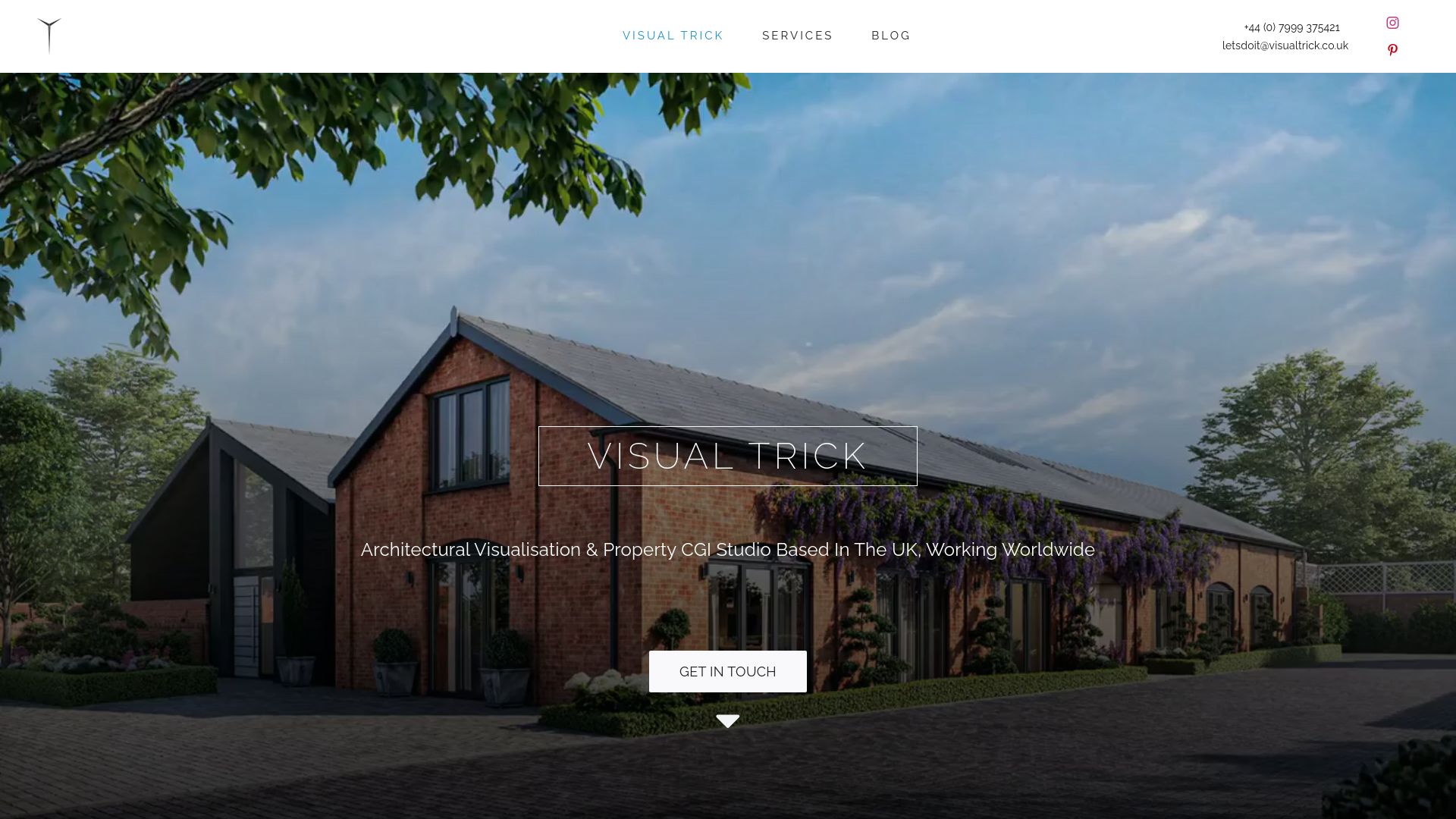
Our relevant services include:
- Planning visuals and verified views, built to the methodology planning officers expect.
- Marketing CGI for brochures, listings and paid social, designed for reuse.
- Exterior CGI and interior CGI for lifestyle and investor-facing imagery.
- 3D animation for walkthroughs and investor pitches.
| What you need | How this is supported |
|---|---|
| Planning-ready verified views | Methodology-led photomontages aligned to agreed viewpoints |
| Reusable marketing assets | Layered deliverables repurposable across brochures, listings and social |
| Tight scheduling | In-house production with a single point of contact and no outsourcing |
| Audience-specific briefs | Shot lists and treatments built around buyer, investor or planning officer needs |
If you are scoping a project that needs both planning-grade accuracy and a marketing pack that performs, our full services page is the place to start a brief.
FAQ
How long does marketing CGI typically take to produce?
Timelines vary with complexity and the number of viewpoints, but marketing-focused renders generally turn around faster than verified planning photomontages, which need survey data and methodology sign-off before production begins. Ask your studio for a project-specific schedule once the brief and required outputs are confirmed.
What is the difference between Type 3 and Type 4 photomontages?
Type 3 visualisations are built to reasonable accuracy and often suit lower-sensitivity sites, while Type 4 visualisations are survey and scale verifiable and are expected for the most demanding planning cases, as set out in the Landscape Institute’s TGN 06/19 guidance. Which type you need depends on the site’s sensitivity and what the planning authority asks for at pre-application stage.
How do I calculate cost per lead from a CGI marketing campaign?
Divide the total cost of the asset pack and its distribution by the number of leads it generates, using UTM-tagged links and CRM lead-source fields to count leads accurately by channel. Comparing that figure against campaigns using standard photography shows whether the CGI investment is paying off.
Can one set of CGI assets serve both planning and marketing purposes?
Yes: building verified views first from a single survey and camera set, then producing marketing variations from the same model, keeps planning and marketing imagery consistent and reduces the need for a second commission, as shown in a Manchester residential development case study. This staged approach also means marketing can begin before final planning sign-off completes.
What should I check before commissioning a CGI studio for ROI-focused work?
Confirm the studio can produce the photomontage type your planning authority requires, ask for layered files your team can repurpose without extra cost, and agree sign-off milestones that let marketing start early. A clear brief tied to your sales or planning objective, rather than a generic shot list, is what determines whether the spend pays back.
Sources
- Home sweet virtual home: The use of virtual and augmented reality technologies in high involvement purchase decisions
- Attracting investors for a landmark residential development in Manchester
